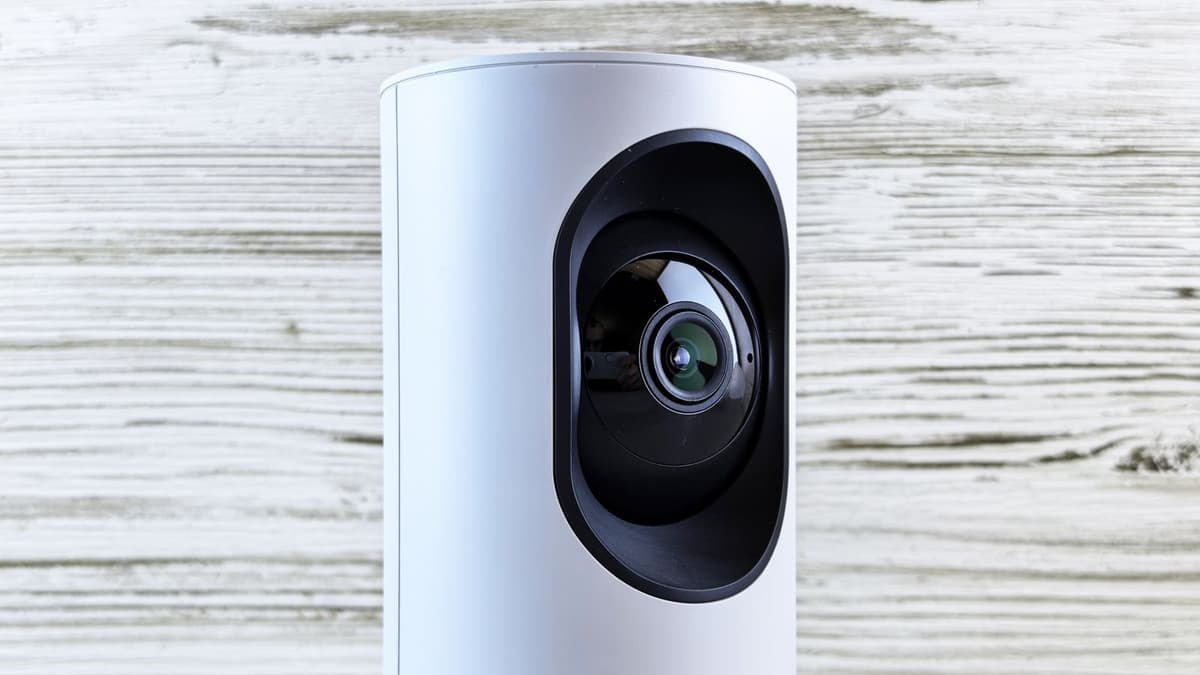
Infant Optics DXR-8 PRO Review 2026: The No-Wi-Fi Pick

A dad of two who's been through the stroller-buying gauntlet twice. I don't pretend to have tested every stroller — I research what parents actually report after months of real use, then tell you what holds up and what quietly disappoints.
Just so you know, some links on this page are affiliate links. If you buy something via them, we get a small kickback. You don't pay more, but it helps toward our research.
There is one baby monitor that cannot be hacked over the internet, for the simple reason that it never touches the internet at all. The Infant Optics DXR-8 PRO is that monitor, and it is the one we would hand any parent whose first question about a nursery camera is "but can someone else see this?" It has been the default recommendation for security-minded families for years, and the reason is refreshingly boring: no app, no account, no cloud, nothing to breach. If a camera on your home network is a line you will not cross, this is the monitor to buy, and the rest of this review is about why it earns that place and where it gives ground.
If you do want to glance at the baby from the office or hand a live view to a grandparent, this is the wrong monitor, and our best baby monitors guide has picks built for that. Everyone still reading has already decided that privacy beats phone access, and for you the DXR-8 PRO is close to ideal.
What it is
The DXR-8 PRO is a non-Wi-Fi video baby monitor: a camera and a dedicated 5-inch parent unit that talk only to each other over a closed, frequency-hopping (FHSS) radio link. There is no phone app, no cloud account, and no internet anywhere in the product. The camera pans, tilts and zooms, the parent unit shows a bright 5-inch HD screen, and the whole thing runs on a signal that constantly changes channel to resist interference and eavesdropping. Where it separates itself from the sea of generic non-Wi-Fi monitors is two features most rivals skip: an interchangeable lens system and patented active noise reduction. Those two things are most of why people pay a little more for this one.
The case for it
The privacy is the headline, and it is real rather than marketing. Because the camera and parent unit communicate on a closed FHSS link and never connect to a router, there is no internet-facing surface for anyone to attack. You are not trusting a company's servers, a password policy, or a firmware team to keep your nursery private. The signal simply cannot be reached from outside your home. For a lot of parents that single fact is worth the price of admission, and it is the thing the app-connected cameras can never fully match no matter how good their encryption is.
Its interchangeable lens is the feature that makes the DXR-8 line feel like a real optical instrument instead of a toy. It ships with a standard lens and accepts an optional wide-angle lens, so you can pull in tight on a newborn's face or open the view up to take in a whole toddler room. That is genuine optical framing, not the smeary digital-zoom crop you get from a fixed-lens monitor when you try to get closer. If your nursery layout changes, or you move the camera to a bigger room later, the optics move with you.
Then there is the active noise reduction, which sounds like a gimmick until three in the morning. Baby monitors pick up a constant hiss of room noise, fans, white-noise machines, and the low hum of the house, and cheaper units bury a real cry underneath all of it. The DXR-8 PRO's ANR strips that constant background out so an actual cry cuts through clearly. It is the difference between a monitor you second-guess and one you trust to wake you for the right reasons.
It also grows with your family. A single parent unit pairs with up to four cameras, so a second baby or a second room does not mean a second monitor and a second screen cluttering the nightstand. You add a camera, cycle between rooms on the one handset, and the whole setup still runs on the same private closed signal. For anyone planning more than one child, or watching a nursery and a toddler room at once, that expandability quietly saves money and hassle down the line, and it is the sort of thing you only appreciate about eighteen months in.
A few quieter things round it out. The parent unit uses a user-replaceable rechargeable battery, which sounds mundane until you remember you will run this thing every single night for two years or more. A sealed-in battery is exactly what kills most monitors long before their electronics give up, and being able to swap it is a genuine long-term saving. The range stretches to around a thousand feet on paper, and while thick walls trim that in the real world, it comfortably covers a normal home from top to bottom. And the DXR-8 line has years of owners behind it, which is worth something in a category full of unproven no-name cameras.
Living with it day to day
The thing people underestimate about a non-Wi-Fi monitor is how little it asks of you. There is no app to update, no account to secure, no notification to manage, and nothing to re-pair after a router reboots. You charge the parent unit, point the camera at the crib, and it works the same way on night four hundred as it did on night one. For a tired parent that consistency is its own feature, and it is the quiet reason owners keep recommending the DXR-8 line long after the initial novelty of a nursery camera wears off.
Pan, tilt and zoom are driven from the parent unit rather than a phone, so you steer the camera with a thumb while you watch, which is genuinely handy for a baby who migrates around the cot. The temperature readout on the parent screen is a small thing that earns its keep in a nursery you are trying to keep at a safe, steady warmth. And because the whole system is self-contained, it travels well: a night at the grandparents' or a weekend away needs no new network and no reconfiguration, just the two units and a place to set the camera down. The most common sentiment among owners, once you read enough of them, is relief. Nothing to breach, nothing to update, nothing to go wrong.
The honest case against it
No monitor is perfect, and the trade-offs here are the direct cost of that closed, private design. The screen is a 5-inch 720p HD panel, which is perfectly usable but not the razor-sharp display you get from the 4K app-first cameras. You are watching a good picture, not a stunning one.
There is no remote viewing, full stop. You cannot check the baby from your phone, from downstairs on the wrong device, or from anywhere outside radio range. That is the deliberate point of the product, but it is worth saying plainly, because every so often an owner wishes they could glance in from the sofa and this is the one monitor that will never let them.
There is no recording and no history either. The DXR-8 PRO shows you a live view and nothing more, so there is no scrolling back to see what woke the baby and no saved clips. And the wide-angle lens that so many owners rave about is an optional extra, not included in the box, so factor that in if a wider view matters to you.
One more practical limit worth naming: there is a single parent unit, so only one person can watch at a time. If you and your partner both want eyes on the baby from separate rooms, an app-connected monitor that streams to two phones does that and this does not. It is a small thing for most households and a real one for some. None of these are faults so much as the honest shape of a monitor built to stay off the grid, but you should know them before you buy.
Who should buy it, and who shouldn't
So which side of the line are you on? Buy the DXR-8 PRO if you have decided, firmly and in advance, that you do not want a camera on your home network. If phone access is simply not a feature you will ever reach for, the cleverness of the app-connected cameras is wasted on you, and this hands you a private, lens-flexible, genuinely reliable monitor with a battery you can swap years down the line. It is also a strong pick for the security-conscious parent who has read one too many hacked-camera stories and wants the certainty rather than the reassurance.
Do not buy it if you know you will want to check in from your phone, in which case the app-connected options in our best baby monitors guide will suit you better. Do not buy it if your real worry is breathing and sleep rather than simply watching, where the overhead Nanit Pro is built for exactly that anxiety. And if the budget will not stretch this far, a simpler no-Wi-Fi monitor covers the core job for less, which is the case our VTech VM819 review makes.
How it compares to the obvious alternatives
Two monitors get cross-shopped against the DXR-8 PRO most often. The first is the eufy E21, and the two answer opposite questions. The eufy adds a 4K camera, an app, and 24/7 local recording, and it can still be switched off Wi-Fi when you want privacy, so it is the more flexible monitor by a distance. But its privacy is a switch you have to trust and remember, where the Infant Optics is private by physical design. If that distinction matters to you, the eufy E21 vs Infant Optics DXR-8 PRO comparison is the head-to-head that settles it.
The second is the VTech VM819, which is also a non-Wi-Fi monitor for a good deal less money. The VTech covers the core job of a private monitor honestly, but it uses a smaller fixed-lens camera and skips the interchangeable optics and the active noise reduction. The DXR-8 PRO is the upgrade you buy when you want more from a no-Wi-Fi monitor than the basics: a bigger, sharper screen, real optical framing, and audio you can trust. If those extras do not move you, the VTech saves you real money for the same core privacy.
One thing to sidestep whichever way you lean: do not try to save a few dollars by buying a cheap, unbranded no-Wi-Fi camera from a marketplace no-name. The whole reason to go non-Wi-Fi is trust, and an unproven brand with no security record and no track record undercuts the one thing you are paying for.
What we'd buy today
If a private nursery is what you are after and phone access is something you are happy to give up, the Infant Optics DXR-8 PRO is the monitor we would put in the crib. It is the rare piece of baby kit that does exactly what it promises and nothing it shouldn't: a clear picture, clean audio, real optical zoom, and a signal no one outside your walls can reach. Add the wide-angle lens if your room is big, set it on the shelf, and stop thinking about it. Get the Infant Optics DXR-8 PRO on Amazon and you have bought yourself the one worry you can genuinely cross off the list.
As an Amazon Associate, we earn from qualifying purchases.
Products Mentioned in This Guide
Still comparing options?
Browse all our brand-vs-brand pushchair guides to find the right fit.
Browse All GuidesFrequently Asked Questions
Is the Infant Optics DXR-8 PRO worth it?
For privacy-minded parents, yes. It is a non-Wi-Fi monitor that never touches the internet, so it cannot be hacked remotely, and it adds an interchangeable lens and active noise reduction that cheaper no-Wi-Fi monitors skip. It is only the wrong choice if you want to check the baby from your phone, which it cannot do.
Does the Infant Optics DXR-8 PRO use Wi-Fi?
No. The camera and parent unit talk to each other over a closed, frequency-hopping signal and never connect to your router, the internet or any app. That is the whole point of the design and the reason it cannot be reached from outside your home.
Can the Infant Optics DXR-8 PRO be hacked?
Not over the internet, because it never connects to it. There is no app, account or cloud to breach, so the usual route into a connected camera simply does not exist here. It is about as private as a video baby monitor gets.
Does the Infant Optics DXR-8 PRO come with the wide-angle lens?
No. It ships with a standard lens, and the wide-angle lens is an optional extra you buy separately. If a wider view of a larger room matters to you, budget for the extra lens on top of the monitor itself.
How many cameras can the Infant Optics DXR-8 PRO use?
A single parent unit pairs with up to four cameras, so you can add a second room or a second child without buying another monitor. You cycle between the cameras on the one handset.