Nanit Pro Review 2026: Is the Breathing Monitor Worth It?

A dad of two who's been through the stroller-buying gauntlet twice. I don't pretend to have tested every stroller — I research what parents actually report after months of real use, then tell you what holds up and what quietly disappoints.
Just so you know, some links on this page are affiliate links. If you buy something via them, we get a small kickback. You don't pay more, but it helps toward our research.
There is a particular kind of reassurance that only comes from watching a number: your sleeping newborn, seen from directly overhead, with their breaths per minute ticking calmly on the screen beside them. The Nanit Pro is the monitor built to give you exactly that, and for an anxious first-time parent it is the one we would point to without hesitation. It pairs a crisp overhead 1080p view with genuine breathing-motion tracking and the best app in the category, and it does the core job without ever asking for a subscription. If your real worry at 2am is not just seeing the baby but knowing they are breathing, this is the monitor that answers it.
If breathing tracking and sleep data are not what is keeping you up, the Nanit is more monitor than you need, and our best baby monitors guide has picks that cost far less and still watch beautifully. But if that specific anxiety is yours, read on, because this is the one that was designed for it.
What it is
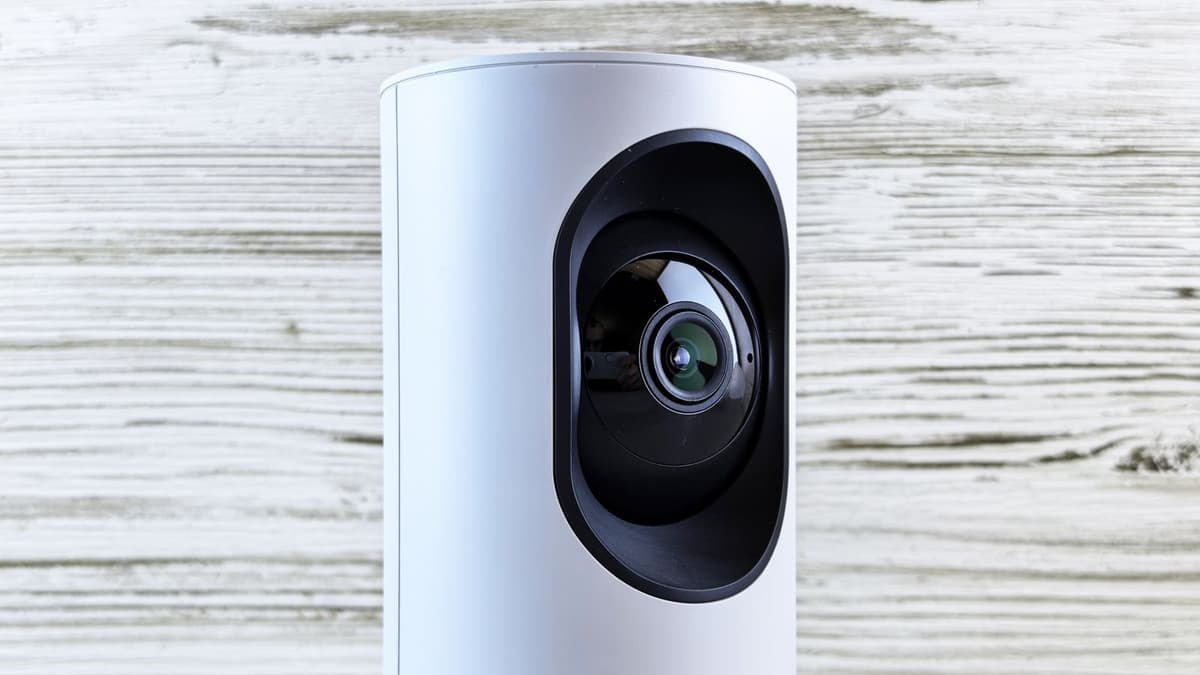
The Nanit Pro is an overhead smart camera. It mounts high on the included floor stand (a wall mount is also available) so it looks straight down into the crib, giving a bird's-eye view of the whole sleep space rather than the low, angled slice most monitors show. The camera streams 1080p over your home Wi-Fi to the Nanit app on your phone or tablet, with two-way audio, sound, motion and cry notifications, night vision, and temperature and humidity readings built in. Its signature trick is breathing-motion monitoring: the baby wears a lightweight Breathing Band, a fabric band printed with a special pattern and containing no sensors, wires or electronics at all, and the camera reads the rise and fall of that pattern to track breathing in real time. A 0-to-3-month Breathing Band comes in the box, along with the floor stand and a six-month trial of the Insights sleep plan.
The case for it
The overhead angle is the thing you feel first. Looking straight down, you see the whole crib and the whole baby at once, and you can watch a chest rise and fall without craning to interpret a side view. It is a genuinely better vantage point for a sleeping infant, and once you have used it a low-mounted camera feels like squinting through a letterbox by comparison.
Breathing tracking is the reason most people choose Nanit, and it is handled elegantly. Because the Breathing Band is just patterned fabric with nothing electronic touching the baby, there is no wearable sensor to charge, no sock to slip off, and nothing sitting against the skin. The camera does the work, reading the pattern and reporting breaths per minute, and alerting you if it stops seeing motion. For a parent who lies awake listening for breathing, having the camera watch it for you is the single most reassuring thing a monitor can do, and Nanit does it more cleanly than the wearable alternatives.
That same overhead view keeps paying off past the newborn stage, too. From directly above you can see at a glance whether a blanket has crept up, whether the baby has rolled into a corner, or whether a toddler is actually asleep or quietly staging a rebellion, all things a low side-angle camera leaves you guessing about. It is a monitor that stays genuinely useful from the first night home well into the toddler years, rather than one you outgrow the moment the baby starts moving around.
Nanit's app deserves its reputation as the best in the category. It is quick, stable, thoughtfully laid out, and pleasant to live in at 3am, which is not a small thing when a clumsy app is the difference between checking the baby and giving up and walking to the room. Two caregivers get access, so both parents can look in from their own phones at the same time, from the next room or from the office. Add the temperature and humidity readouts and the background-audio mode that keeps sound running while you use other apps, and it adds up to a monitor that feels modern and complete.
And contrary to a stubborn myth, the Nanit works fully as a monitor with no subscription. Live video, two-way audio, notifications, breathing monitoring with the band, temperature and humidity, all of it runs without paying a penny beyond the hardware. The paid Insights plan is an optional layer on top, and the box includes six months of it to try.
Living with it day to day
Setup is the part that surprises people, because an overhead camera sounds fiddly and the floor stand makes it simple. The stand arches over the crib so you are not drilling into a wall or wrestling a mount, and the app walks you through pairing and positioning so the camera sees the whole mattress. Getting the framing right matters more here than on a normal monitor, because the breathing tracking depends on the camera having a clean view of the band, but once it is set you rarely touch it again.
Then the rhythm settles in. You glance at the app, you see the overhead view and the breathing indicator, and you go back to sleep. Notifications are tunable, so you can dial in what actually wakes you and silence what does not, which is the feature that decides whether a smart monitor becomes a comfort or a nuisance. The two-caregiver access earns its keep in the small hours, when one parent can check from bed without the other having to move. Where the Insights plan starts to justify itself, if you keep it past the trial, is in the morning: a sleep summary that shows how the night actually went, how many times the baby stirred, how long they were truly asleep. Some parents find that data genuinely useful for spotting patterns and building a routine, and others glance at it once and never open it again. Which camp you fall into is worth being honest with yourself about before the trial ends and the plan renews.
The honest case against it
The main drawback is the price. The Nanit is a premium monitor and it is priced like one, comfortably the most expensive pick in our monitor lineup. If you do not specifically want breathing and sleep tracking, you are paying for capability you will not use, and one of the cheaper picks will serve you better.
It is also a Wi-Fi monitor, which means it lives on your home network and streams through Nanit's app and servers. Nanit is a reputable brand with a real security record, and that is exactly why we would trust it where we would never trust a cheap unbranded camera, but it is still a connected device rather than a closed private one. If a camera on your network is a line you will not cross, this is not your monitor, and a non-Wi-Fi pick is the honest fit. Whichever connected monitor you choose, set a strong, unique password and treat that as non-negotiable.
There is also no dedicated parent unit in this configuration. You watch on your phone or tablet, which most parents prefer anyway, but it does mean your monitor is only as reliable as your phone: a flat battery, a stray do-not-disturb setting, or notifications you have muted can all get between you and an alert. It is worth a minute setting up the app's alerts deliberately rather than assuming they will just work. Parents who want a physical screen that is always on and cannot be silenced by accident are better served by a monitor with its own handset.
Two smaller things to budget for. The included Breathing Band fits roughly the first three months, and you buy larger sizes as your baby grows, so factor in the odd replacement over the first couple of years. And while the monitor works without a subscription, the deeper sleep analytics and saved video history live behind the Insights plan once the six-month trial ends, so if that data becomes something you rely on it turns into a recurring cost. None of this is hidden, but you should walk in knowing it.
Who should buy it, and who shouldn't
Buy the Nanit Pro if you are the parent whose central worry is breathing and sleep, not just visibility. First-time parents of newborns, parents who have had a scare, and anyone who finds real comfort in data are exactly who this was built for. If you want the overhead view, the breathing reassurance, and an app you will actually enjoy using, and you are comfortable with a Wi-Fi camera from a trusted brand, it is worth its premium.
Do not buy it if privacy is your overriding concern and you want a camera that never touches the internet, in which case the Infant Optics DXR-8 PRO review makes the case for the closed-signal route. Do not buy it if the budget is tight and you mainly need to see and hear the baby, where the honest, low-cost option is covered in our VTech VM819 review. And if you would rather have a dedicated parent screen than rely on your phone, our best baby monitors guide has picks with their own handset instead of an app-only camera.
How it compares to the obvious alternatives
The most common cross-shop is the eufy E21, and the two split cleanly on what you value. The eufy gives you a 4K pan-tilt camera, its own parent screen, and 24/7 local recording with no subscription, all for a good deal less money, and it is the smarter all-round buy for most families. What it does not do is track breathing or read sleep, so if that reassurance is the whole reason you are shopping, the Nanit earns its place and the eufy does not replace it. If watching is enough, our eufy E21 review lays out why it is our overall pick.
Another alternative worth naming is the wearable route: sock-style monitors like the Owlet that clip a sensor to the baby's foot to read oxygen and heart rate. That is a genuinely different tool, more medical-feeling and more expensive to run, and some parents love it. Nanit's approach, reading breathing from a patterned band the camera watches, keeps everything off the baby's skin and rolls it into the monitor you already want, which is why we prefer it for most people. The honest caveat with any of these: a consumer monitor is reassurance, not a medical device, and it does not replace safe-sleep basics.
What we'd buy today
If the thing you cannot stop thinking about is whether your baby is breathing, the Nanit Pro is the monitor that puts that worry on a screen where you can see it answered. The overhead view, the sensor-free breathing band, and the best app in the business add up to the most reassuring nursery camera you can buy, and it does the core job without a subscription. Mount it over the crib, put the band on, and let the camera do the watching you would otherwise lie awake doing yourself. Get the Nanit Pro on Amazon and buy back a few hours of sleep you would have spent listening in the dark.
As an Amazon Associate, we earn from qualifying purchases.
Products Mentioned in This Guide
Still comparing options?
Browse all our brand-vs-brand pushchair guides to find the right fit.
Browse All GuidesFrequently Asked Questions
Is the Nanit Pro worth it?
If breathing and sleep tracking is your main concern, yes. It gives an overhead view, camera-read breathing monitoring and the best app in the category, and it works fully as a monitor with no subscription. It is only hard to justify if you do not want those tracking features, since it is the priciest monitor of the group.
Does the Nanit Pro require a subscription?
No. Live video, two-way audio, notifications, breathing monitoring with the band, and temperature and humidity all work without paying anything beyond the hardware. The optional Insights plan adds sleep analytics and saved video history, and the box includes a six-month trial of it.
Does the Nanit Pro track breathing?
Yes. The camera watches a specially patterned Breathing Band the baby wears and reads the rise and fall of that pattern to report breaths per minute, alerting you if it stops seeing motion. A newborn-size band is included in the box.
Does the baby wear a sensor with the Nanit Pro?
No. The Breathing Band is just patterned fabric with no sensors, wires or electronics in it. Nothing electronic touches the baby, which is the main way Nanit differs from sock-style wearable monitors.
Does the Nanit Pro come with a parent unit?
This version does not. It is the camera and floor stand, and you view everything through the Nanit app on your phone or tablet. If you want a dedicated always-on screen, a monitor with its own handset will suit you better.